
A well-functioning eavestrough system is one of the most cost-effective ways to protect your home. When gutters are undersized, clogged, or improperly installed, the consequences compound fast: saturated soil around the foundation, basement water infiltration, erosion of landscaping, and staining on siding and masonry. Aluminum eavestroughs have become the industry standard for residential and light commercial applications, and for good reason — they’re durable, lightweight, and available in seamless configurations that eliminate the most common source of leaks.

Your eavestrough system does one of the most important jobs on your property — directing water safely away from the foundation. Getting it right starts with understanding what to look for before you buy or replace.
Seamless vs. sectional: which is right for your project?
Traditional sectional gutters are assembled from pre-cut pieces joined with connectors and sealant. They’re relatively easy to transport and handle, but every joint is a potential leak point — especially after years of expansion, contraction, and ice buildup. Seamless aluminum gutters are formed on-site using a roll-forming machine, producing a continuous run of gutter custom-cut to the exact length of each roofline section. The only seams are at the corners and downspout outlets, dramatically reducing the risk of leaks over time.

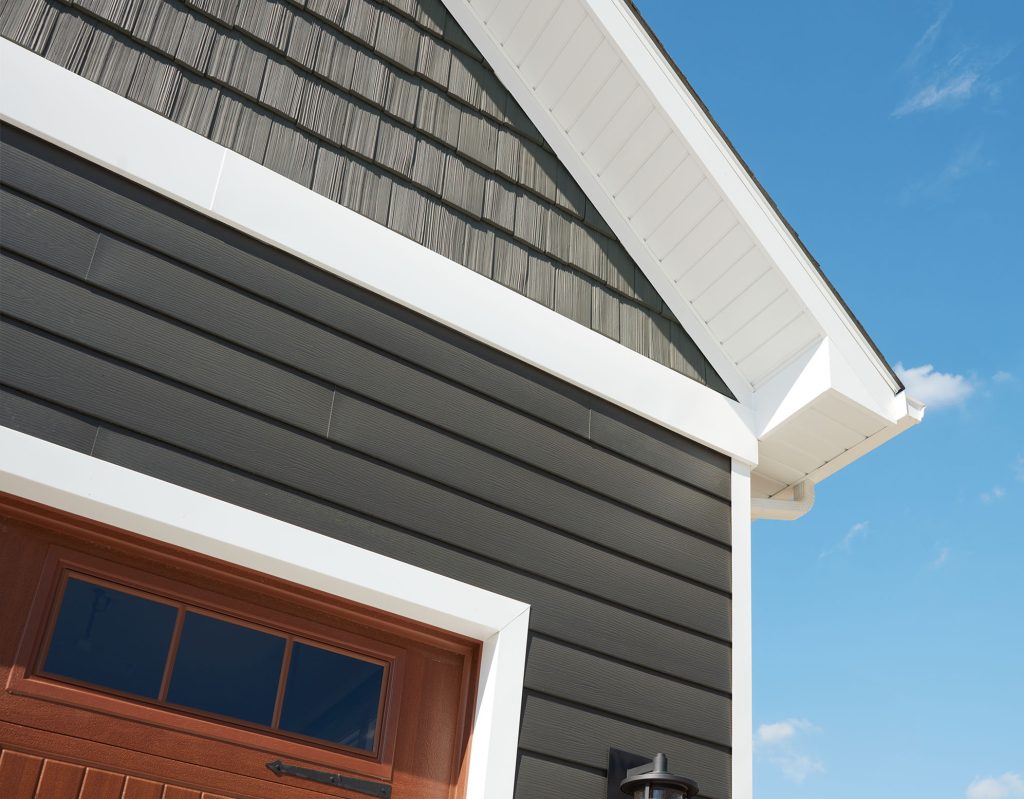
For most residential installations, seamless aluminum is the recommended choice. The incremental cost is modest, and the long-term performance advantage is significant — particularly in climates that experience heavy snowfall and ice.
Sizing your eavestrough correctly
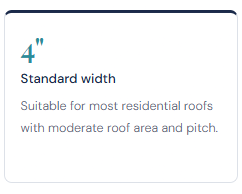
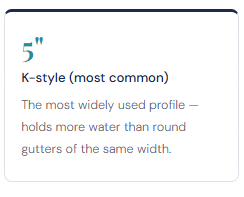
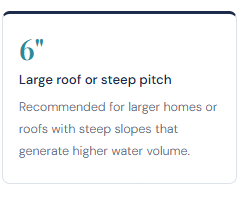
One of the most common mistakes in eavestrough installation is undersizing. The right gutter width depends on three factors: the square footage of the roof area draining into that run, the pitch of the roof, and the local rainfall intensity. A steeper roof sheds water faster, which means a larger volume hits the gutter in a shorter period of time — requiring a larger gutter and more downspouts to handle the flow.
As a general rule of thumb: a 4-inch gutter handles approximately 5,500 sq. ft. of roof area on a low-slope roof, while a 6-inch gutter can manage significantly more. Your contractor should calculate the drainage area and select sizing accordingly rather than defaulting to the smallest available option.
Best practice
Position downspouts at least one every 35–40 feet of gutter run, and always at the corners of the building where water tends to concentrate. Extensions or underground drainage pipes should direct water a minimum of 6 feet away from the foundation.
Slope and pitch: the details that make or break performance
Gutters need to slope slightly toward the downspout to function properly — typically ¼ inch of drop for every 10 feet of gutter run. Too little slope and water pools and stagnates, becoming a breeding ground for mosquitoes and causing premature deterioration of the gutter seams and hangers. Too much slope and the gutter looks uneven and may not drain fully at the high end during heavy rain.
Getting the slope right is largely an installation detail, but it’s worth asking your contractor about before work begins — particularly on long runs, on older homes where the fascia board itself may not be perfectly level, or on roofs with complex geometry.
Maintenance: keeping your eavestroughs performing year after year
Even the best eavestrough system requires periodic maintenance. In most parts of Quebec and Eastern Canada, a twice-yearly cleaning is recommended — once in late spring after seeds and pollen have fallen, and again in late fall after the leaves have dropped. During cleaning, check the following:
- Clear debris from gutters and flush with water to confirm free flow to downspouts
- Inspect joints and end caps for signs of sealant failure or separation
- Check hangers and spike fasteners — loose ones should be replaced with hidden hanger brackets for a more secure and lasting hold
- Look for any low spots where water is pooling, which indicates the slope needs adjustment
- Inspect downspout connections and ensure extensions are directing water away from the foundation
Gutter guards and leaf filters can reduce cleaning frequency, but they don’t eliminate the need entirely — particularly for homes near deciduous trees. If you’re considering guards, choose a style compatible with your gutter profile and local debris type.
When it’s time to replace, not just repair
Most aluminum eavestroughs have a lifespan of 20 years or more with regular maintenance. Replacement is typically warranted when you see widespread sagging or separation from the fascia, multiple areas of sealant failure, visible cracks or holes, or peeling and heavy oxidation of the finish. If your gutters are original to a home that’s 25 or more years old, a full replacement is often more cost-effective than ongoing repairs — especially if you’re already updating the fascia or siding.
Planning a gutter replacement or new installation?
Aluminum Cardinal specializes in seamless aluminum eavestrough supply and installation. We’ll help you size the system correctly and ensure it’s installed to last. Request a Quote
Laisser une réponse